Last updated: February 1, 2026
Benedict Oramah: From NEXIM to Afreximbank, Oramah has built an African-owned financial infrastructure that powers intra-African trade and continental self-determination
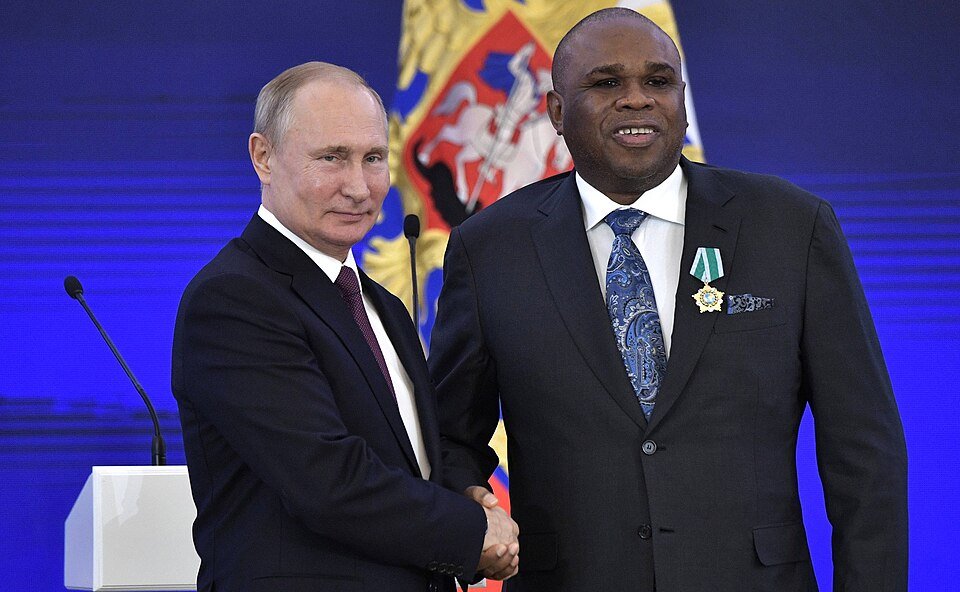
Professor Benedict Okey Oramah has spent three decades doing something many once thought impossible: building an African‑owned trade finance powerhouse capable of underwriting the continent’s integration on its own terms. For Afrispora News, his story is central to understanding how African leadership is re‑engineering the financial infrastructure behind the AfCFTA era.
From NEXIM to the Afreximbank engine room
A Nigerian economist by training, Benedict Oramah began his career at the Nigerian Export‑Import Bank (NEXIM), where he worked as an Assistant Manager in the early 1990s. In 1994 he joined the newly established African Export–Import Bank (Afreximbank) in Cairo as one of its original employees, initially serving as Chief Analyst before rising through roles as Assistant Director, Deputy Director and, in 2004, Director of the Planning and Business Development Department. By 2008 he had become Executive Vice President in charge of Business Development and Corporate Banking, supervising trade finance, project and export development finance, syndications, and corporate advisory.
On 21 September 2015, Oramah was appointed President and Chairman of the Board of Directors of Afreximbank, becoming the institution’s third president. He was reappointed for a second five‑year term in 2020, reflecting shareholder confidence in his strategic vision and execution.
Transforming Afreximbank into a continental group
Under Oramah’s leadership, Afreximbank has been transformed from a specialised trade‑finance bank into a group platform with multiple subsidiaries and strategic initiatives. The bank now comprises the core institution plus:
- the Fund for Export Development in Africa (FEDA), an impact‑oriented private equity arm.
- AfrexInsure, an insurance management subsidiary.
- the MANSA KYC repository for African entities.
- the Pan‑African Payment and Settlement System (PAPSS) for cross‑border trade in local currencies.
- the Creative Africa Nexus (CANEX) for creative industries.
- the African Medical Centre of Excellence (AMCE) in partnership with Nigeria, and
- the Intra‑African Trade Fair (IATF), a flagship marketplace for continental business.
By April 2025, Afreximbank’s total assets and guarantees had grown more than eight‑fold to about US$43.5 billion, while annual revenues rose seven‑fold to US$3.24 billion, and net income increased by roughly 700% to about US$1 billion. Over his decade at the helm, the bank invested approximately US$155 billion in Africa and the Caribbean, including US$120 billion between 2020 and May 2025, cementing its role as a systemic player in African trade and investment.
Architect of AfCFTA‑era trade finance
Oramah has positioned Afreximbank at the centre of the African Continental Free Trade Area (AfCFTA) implementation. In a widely cited lecture and in his article “Afreximbank in the Era of the AfCFTA” for the Journal of African Trade, he outlines how the bank is supporting the agreement through direct financing, risk‑mitigation instruments and digital platforms. Between 2017 and 2021, Afreximbank disbursed over US$20 billion in support of intra‑African trade and investments, and it plans to double this to US$40 billion over the 2022–2026 period.
Key instruments and initiatives include:
- PAPSS, which allows cross‑border payments in local currencies and had processed around US$68 billion in trade payments across 16 countries by mid‑2025, reducing reliance on extra‑continental currencies.
- the AfCFTA Adjustment Fund, a planned US$10 billion facility for which Afreximbank is Fund Manager, designed to help countries cope with short‑term tariff revenue losses and structural adjustments as tariffs are removed.
- Africa Trade Exchange (ATEX), a pooled procurement platform supporting access to strategic commodities, especially during crises.
- expanded trade confirmation lines to African banks, with a goal of granting US$8 billion so that every country has at least one bank with a dedicated line for intra‑African trade.
Under Oramah, the share of intra‑African trade in the bank’s loan portfolio has risen from around 3% to 32%, and Afreximbank has become what some commentators call the “financial backbone” of AfCFTA.
“African Best Practice” and bold, unconventional deals
In speeches and interviews, Oramah describes his leadership philosophy as rooted in “African Best Practice”—an approach that prioritises context‑appropriate solutions over imported “international standards” that, in his view, have often constrained African development. This philosophy has underpinned a willingness to back large, complex projects that other institutions considered too risky.
Examples highlighted in his 2025 farewell address include:
- more than US$4 billion in support for Nigeria’s Dangote Refinery and Petrochemical Complex, now operational and expected to reduce petroleum import bills by US$10–12 billion annually.
- a US$2.9 billion credit facility, raised entirely from African sources, for Tanzania’s Rufiji hydropower dam;
- investments in Special Industrial Zones across at least nine African countries; and
- the establishment of Africa’s first Medical Centre of Excellence, aimed at reducing outbound medical tourism.
Critically, Oramah has also championed support for creative industries, using CANEX and IATF to channel finance to film, music, fashion and digital media, arguing that Africa’s cultural economy is both a growth engine and a vehicle for reclaiming narrative power.
Afrispora lens: financing a Global Africa
From an Afrispora News perspective, Professor Benedict Oramah’s legacy lies in how he has treated finance as a tool of integration and self‑determination. His doctrines on structured trade finance—captured in his book Foundations and Evolution of Structured Trade Finance and reflected in Afreximbank practice—have helped shift South–South trade from 23% to an estimated 68% of African trade over three decades, according to Afreximbank commentary.
As he steps down after a “transformative decade,” Afreximbank’s stronger balance sheet, its ecosystem of subsidiaries and platforms, and its deep entanglement with AfCFTA mean that Oramah’s influence will persist in the patterns of payments, risk‑sharing and investment that shape Africa’s future.
For Afrispora News, documenting his story with clarity, dignity and historical integrity underscores a vital truth: African expertise is not only negotiating better terms within existing systems—it is also building new financial circuitry, designed in Africa, for a truly Global Africa.
