
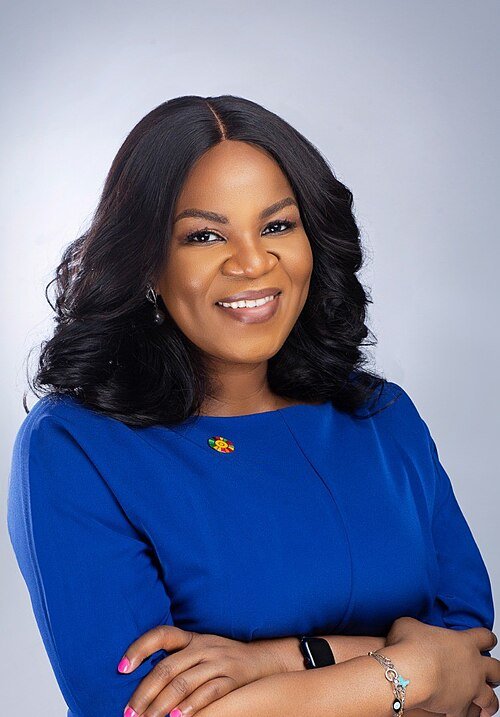
Damilola Ogunbiyi and Africa’s Role in Shaping the Global Energy Transition
Damilola Ogunbiyi represents a decisive strand of contemporary African leadership: technocrats whose authority is exercised not through rhetoric, but through the design and coordination of systems that determine how societies power health, education, industry, and climate resilience. Her work sits at the centre of global debates on universal energy access and the clean energy transition, where questions of justice, development, and decarbonisation increasingly converge.
Born in Nigeria, Ogunbiyi’s career traces a path from national electricity reform to the commanding heights of multilateral energy governance—illustrating how African-born expertise is shaping the rules, financing, and priorities of the global energy transition.
From Nigeria’s Power Sector to Global Energy Governance
Before assuming global leadership roles, Ogunbiyi built her credibility within Nigeria’s power sector, where she combined policy design with implementation. She served as the first female Managing Director of Nigeria’s Rural Electrification Agency (REA), leading a period of institutional expansion and reform aimed at addressing chronic energy exclusion.
At REA, she initiated and oversaw the Nigerian Electrification Project, a US$550 million programme supported by the World Bank and the African Development Bank. The project focused on off-grid and mini-grid solutions for underserved rural and peri-urban communities, reframing electrification not as a distant infrastructure promise but as an immediate development tool for clinics, schools, and small enterprises.
Her earlier roles—as Senior Special Assistant to the President of Nigeria on Power and as the first woman General Manager of the Lagos State Electricity Board—reinforced this approach. In Lagos, she supervised programmes that deployed solar power to public institutions, embedding clean energy into health and education systems rather than treating it as a standalone climate intervention.
At the Centre of SDG7: CEO of SEforALL and UN Special Representative
Ogunbiyi’s influence expanded dramatically with her appointment as Chief Executive Officer and Special Representative of the UN Secretary-General for Sustainable Energy for All (SEforALL), alongside her role as Co-Chair of UN-Energy. These positions place her at the heart of global coordination on Sustainable Development Goal 7: ensuring access to affordable, reliable, sustainable, and modern energy for all.
Under her leadership, SEforALL has:
-
Worked with more than 200 public and private partners
-
Supported over 90 countries in energy planning and transition strategies
-
Helped catalyse hundreds of billions of dollars in energy finance commitments, spanning electricity access, clean cooking, cooling, and energy transition infrastructure
She has championed initiatives such as:
-
The Universal Energy Facility
-
Powering Healthcare
-
Women and Youth at the Forefront
-
Universal Integrated Energy Plans and Energy Transition Plans
These tools shift energy policy from aspirational targets to data-driven, country-owned pathways—linking electrification directly to development outcomes and fiscal planning.
Mission 300 and Africa’s Energy Justice Agenda
For Afrispora News, one of Ogunbiyi’s most consequential contributions is her leadership in Mission 300—the initiative to connect 300 million Africans to electricity by 2030. As Co-Chair of the Mission 300 Joint Working Group, she works closely with the World Bank, the African Development Bank, The Rockefeller Foundation, and the Global Energy Alliance for People and Planet to align public policy, development finance, and private capital behind large-scale electrification.
This effort addresses a central injustice she repeatedly underscores: that the overwhelming majority of people still living without electricity are in the Global South, with Africa bearing a disproportionate share despite contributing minimally to historical global emissions.
Her work insists that Africa’s energy transition must not replicate extractive patterns—whether through carbon markets or supply chains—but instead generate jobs, manufacturing capacity, and technological sovereignty on the continent. Her involvement in initiatives such as the Africa Carbon Markets Initiative (ACMI) and the Africa Renewable Energy Manufacturing Initiative (AREMI) reflects this position: climate action must deliver development dividends, not merely offsets.
Global Recognition and Institutional Authority
Ogunbiyi’s leadership has been recognised internationally, including her inclusion on the TIME100 Climate list of the world’s most influential climate leaders. Across UN General Assembly forums, climate summits, and G20-linked platforms, she consistently links energy poverty to health outcomes, gender equality, economic productivity, and climate resilience.
Her interventions challenge a narrow reading of net-zero transitions by arguing that global climate goals are unattainable if hundreds of millions of Africans remain without basic energy access. In this framing, energy justice is not an add-on to climate policy—it is foundational to its success.
Afrispora Context: African Agency in Global Energy Systems
From an Afrispora News perspective, Damilola Ogunbiyi exemplifies a generation of African-born leaders whose influence is exercised within global systems but remains anchored in continental realities. She does not merely administer international programmes; she helps define what success looks like—measured not only in megawatts or emissions curves, but in hospitals powered, women-led enterprises enabled, and national agencies preserved in energy planning.
Positioned alongside figures shaping health, trade, finance, and infrastructure, Ogunbiyi completes a critical arc in the Afrispora record: Africans redesigning the energy systems that will determine whether the 21st century is both equitable and sustainable.
