Last updated: February 1, 2026
Amina J. Mohammed: Designing the Global Framework for Sustainable Development
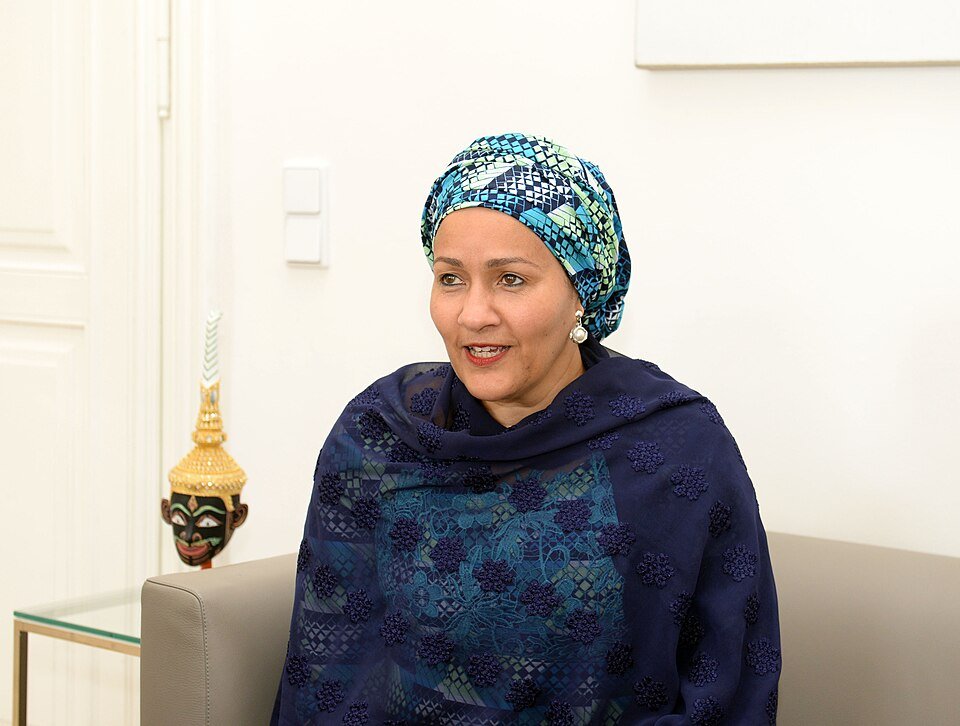
Amina J. Mohammed stands among the most consequential African women in contemporary multilateral diplomacy. As Deputy Secretary-General of the United Nations and a principal architect of the 2030 Agenda for Sustainable Development, she has helped translate decades of Global South priorities—on poverty, inequality, climate, gender, and governance—into a single, binding global framework that now shapes policy across nearly every country in the world.
Her influence is structural rather than ceremonial: she has been central to defining what development means, how it is measured, and how international institutions organise themselves to deliver it.
From Northern Nigeria to the Frontlines of Global Development
Born in 1961 to a Nigerian father and British mother, Amina J. Mohammed grew up in northern Nigeria, spending formative years in Gombe and Kaduna. Trained in architecture and development, she began her professional life designing schools, clinics, and public facilities—work that placed her in direct contact with the everyday realities of access, exclusion, and infrastructure failure.
This early career shaped her enduring orientation toward development as a lived experience rather than an abstract policy exercise. She soon moved into advocacy focused on education, social services, and the rights of marginalised communities, laying the groundwork for a career that would consistently bridge technical planning with human development and justice.
Nigeria’s Development Strategy and the MDG Era
Mohammed first gained international prominence as Nigeria’s Senior Special Assistant to the President on the Millennium Development Goals (MDGs). In that role, she coordinated the deployment of debt-relief savings toward targeted investments in health, education, and poverty reduction, helping ensure that fiscal gains translated into measurable social outcomes.
She oversaw the creation of a Virtual Poverty Fund, an accountability mechanism designed to track MDG-related spending across ministries and levels of government. Beyond programme coordination, she advised successive Nigerian administrations on public-sector reform and development strategy, becoming one of the most influential technocratic voices in Nigeria’s engagement with global development frameworks.
Architect of the Sustainable Development Goals
In 2012, Mohammed was appointed Special Adviser to UN Secretary-General Ban Ki-moon on Post-2015 Development Planning, a role that placed her at the centre of one of the most complex multilateral negotiations of the 21st century.
She acted as the connective tissue between the Secretary-General, the High-Level Panel of Eminent Persons, the General Assembly’s Open Working Group, governments, civil society, and private-sector actors. Under her stewardship, disparate priorities—ranging from climate action and gender equality to peace, governance, and data—were consolidated into the 2030 Agenda for Sustainable Development and its 17 Sustainable Development Goals (SDGs).
This achievement marked a decisive shift in development cooperation. The SDGs replaced siloed sectoral targets with an integrated framework linking economic growth, social justice, environmental sustainability, and institutional accountability. Within the UN system and academic literature alike, Mohammed is widely recognised as one of the SDGs’ principal designers.
National Leadership and Climate Governance
Returning to Nigeria, Mohammed served as Minister of Environment from 2015 to 2016. Her portfolio spanned climate policy, reforestation, biodiversity protection, and environmental remediation, including work on oil pollution in the Niger Delta. She represented Nigeria at critical climate negotiations as the Paris Agreement was finalised and operationalised, reinforcing her standing as a policymaker fluent in both domestic governance and international climate diplomacy.
This period further cemented her credibility as a leader capable of moving between national implementation and global norm-setting.
Deputy Secretary-General: Stewarding the 2030 Agenda
In 2017, António Guterres appointed Amina J. Mohammed as the 5th Deputy Secretary-General of the United Nations, making her the first Nigerian and the highest-ranking woman ever to hold the post.
As Deputy Secretary-General and Chair of the UN Sustainable Development Group, she oversees the UN development system’s support to countries implementing the 2030 Agenda. Her responsibilities include coordinating dozens of UN entities, advancing reforms to make UN country teams more coherent and accountable, mobilising financing for the SDGs, and ensuring that human rights, gender equality, and climate action are embedded across development strategies.
Mohammed has consistently pressed for acceleration, warning that incrementalism will not deliver the SDGs. Her field visits—to regions such as the Lake Chad Basin and South Sudan—highlight how climate change, conflict, displacement, gender-based violence, and youth unemployment intersect, demanding integrated responses rather than fragmented projects. Her public leadership has repeatedly underscored inclusive governance and women’s leadership as non-negotiable pillars of sustainable development.
Afrispora Context: African Leadership at the Norm-Setting Core
From an Afrispora News perspective, Amina J. Mohammed represents African leadership at the normative centre of the international system. As a designer of the SDGs and the UN’s second-in-command, she has helped ensure that African and Global South priorities are no longer peripheral considerations, but embedded in the global rules, metrics, and expectations that guide policy worldwide.
Her trajectory—from designing local schools and clinics to shaping universal development goals and steering UN reform—illustrates how African-born women are not merely participating in multilateral institutions, but actively rewriting their operating logic. Her work exemplifies Afrispora at its most structural: leadership that reshapes global frameworks with clarity, dignity, and an insistence on justice for those historically excluded.
