Last updated: February 1, 2026
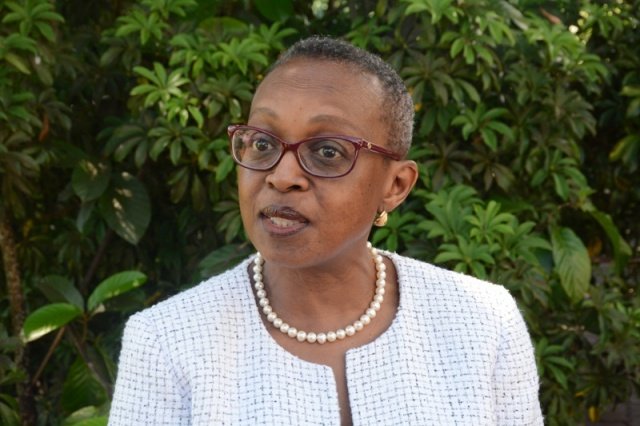
Dr Matshidiso Moeti: Quiet Architect of a New Era in African Public Health – Dr Matshidiso Moeti and a Decade of African Global Health Leadership at WHO
Dr Matshidiso Rebecca Moeti has spent the last decade doing something deceptively simple but historically significant: making it harder for the world to talk about African health systems as if they were perpetually broken, passive, or dependent. As the first woman and first Botswana national to serve as WHO Regional Director for Africa, she has helped steer the continent through Ebola, COVID‑19 and countless other emergencies—while quietly transforming the institution mandated to support 47 African countries.
From Southern Africa to the global health arena
Born in Johannesburg in 1954 and raised in Botswana, Moeti grew up in a family deeply involved in health and public service, an upbringing that grounded her later insistence that health is both a right and a political choice. She studied medicine at the Royal Free Hospital School of Medicine, University of London and went on to complete a Master’s degree in community health for developing countries at the London School of Hygiene & Tropical Medicine. Before joining WHO, she served in national and international roles, including as a senior official in Botswana’s health system, Regional Health Adviser at UNICEF’s Regional Office for Eastern and Southern Africa and Team Leader for the Africa and Middle East Desk at UNAIDS.
First woman to lead WHO’s African Region
In 2015, the WHO Executive Board appointed Moeti as Regional Director for the WHO African Region, making her the first woman ever to hold that position. She assumed office in the immediate aftermath of the West Africa Ebola crisis, at a time when WHO’s credibility on the continent was under intense scrutiny. Moeti responded by launching a comprehensive Transformation Agenda aimed at making the regional office more accountable, efficient and country‑focused, strengthening performance management, financial oversight and support to national health authorities.
A recent WHO/AFRO legacy publication, A Decade of Transformation 2015–2024, credits her leadership with “repositioning WHO in the African Region as a credible, responsive institution,” noting improvements in emergency response capacity, technical assistance and partnership with African Union bodies.
Polio eradication, health security and COVID‑19
Under Moeti’s stewardship, the African Region achieved one of its greatest public health victories: in 2020, the WHO African Region was certified free of wild poliovirus, after decades of coordinated vaccination and surveillance. The polio infrastructure—laboratories, community networks, and rapid‑response mechanisms—has since become a backbone for responding to other outbreaks, including measles, cholera and Ebola.
Moeti has also been a central figure in advancing health security on the continent, strengthening Integrated Disease Surveillance and Response and field epidemiology training programmes, and supporting countries to establish public‑health emergency operations centres. During the COVID‑19 pandemic, she became a key voice drawing attention to vaccine inequity and supply‑chain constraints, while coordinating technical guidance to help countries maintain essential services and adapt global recommendations to African realities.
Her earlier work on HIV/AIDS also left a deep imprint. At WHO/AFRO she led the regional push to scale up antiretroviral therapy during the “3 by 5” initiative, challenging assumptions that complex treatments could not be delivered at scale in resource‑limited settings. Those gains are now embedded in broader strategies for universal health coverage and integrated chronic‑disease care.
Equity, gender and an Africentric vision of health
Moeti’s public statements consistently articulate an Africentric approach to public health. In a reflection for the advocacy group Afya na Haki, she is celebrated for insisting that health systems must centre “equity and leaving no one behind,” with particular attention to rural communities, informal settlements and groups historically marginalised by class, gender or geography. She has championed closer collaboration between WHO, the Africa CDC and the African Union, aligning the regional office’s work with the AU’s Africa Health Strategy and the push for an African‑led “new public health order.
As a visible woman leader at the top of a UN technical agency, Moeti has also become an important voice on gender and leadership in global health. In interviews with initiatives such as WomenLift Health and the London School of Hygiene & Tropical Medicine, she has highlighted the paradox that women are the backbone of health services yet remain under‑represented in senior decision‑making roles. She calls for tackling power imbalances; discriminatory norms and the gender pay gap—not as optional add‑ons but as structural determinants of health outcomes.
Afrispora lens: institutional leadership as legacy
From an Afrispora News perspective, Dr Matshidiso Moeti represents a strand of African leadership that is less about soaring rhetoric and more about institutional stewardship. Her tenure at WHO/AFRO has been marked by methodical reforms, strengthened systems and carefully built partnerships that will continue to shape African health policy long after she leaves office.
In a global discourse that often still frames Africa as a site of perpetual crisis, Moeti’s work offers a different narrative: a continent investing in its own public‑health capacities, asserting its priorities in global forums, and demonstrating that African women can lead complex multilateral institutions with rigour, humility and a relentless focus on equity. For Afrispora’s mission—to document African and diaspora achievement with clarity, dignity and historical integrity—her story is not just worthy of record; it is foundational to understanding how Africa is reshaping the very grammar of global health.
