
Last updated: February 1, 2026
Professor Agnes Binagwaho: From rebuilding Rwanda’s post‑genocide health system to co-founding the University of Global Health Equity, Binagwaho has transformed policy, practice, and training in African and global health
Professor Agnes Binagwaho is one of the clearest examples of African public health leadership turning the language of “equity” into concrete systems that actually change who gets care, when, and on what terms.
From exile to rebuilding Rwanda’s health system
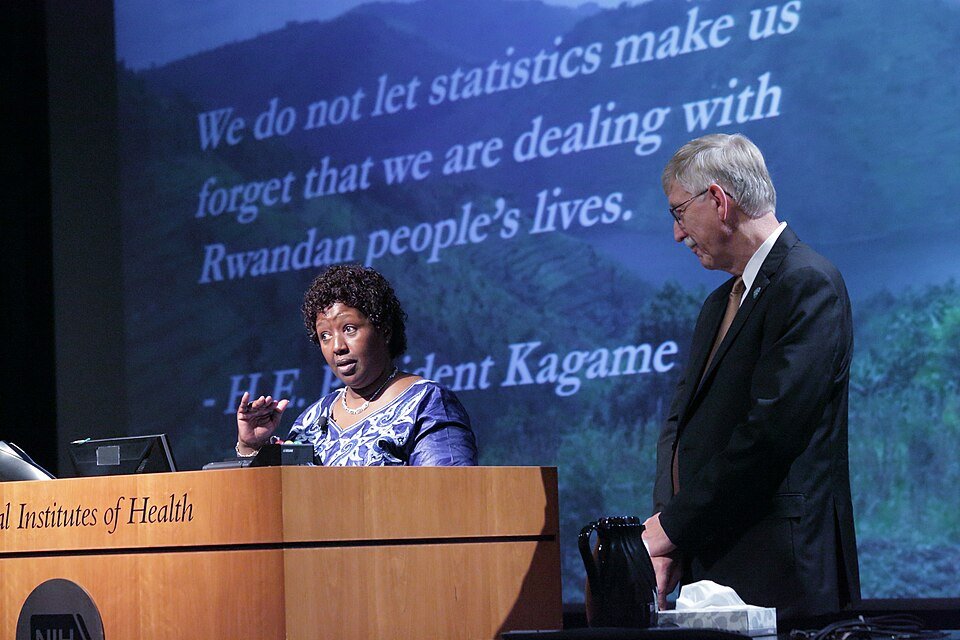
A Rwandan paediatrician by training, Agnes Binagwaho completed her MD in general medicine at the Université Libre de Bruxelles and later earned a master’s in paediatrics at the Université de Bretagne Occidentale. She returned to Rwanda in 1996, two years after the 1994 genocide against the Tutsi, to find a shattered health system and a traumatised population in urgent need of both clinical care and institutional re‑imagining. Beginning as a clinician in public hospitals, she moved into national leadership roles, serving as Executive Secretary of the National AIDS Control Commission, then Permanent Secretary of the Ministry of Health, and eventually Minister of Health of Rwanda from 2011 to 2016.
During her time in government, Binagwaho also engaged the global arena, co‑chairing the Millennium Development Goal Project Task Force on HIV/AIDS and Access to Essential Medicines for the UN Secretary‑General under Professor Jeffrey Sachs, and co‑chairing the Joint Learning Initiative on Children and HIV/AIDS. These roles allowed her to bring Rwanda’s emerging experience in HIV treatment and health financing into global policy conversations, while ensuring that international norms reflected realities in low‑income, post‑conflict settings.
Designing an equitable health system: insurance, vaccines and community care
Binagwaho’s tenure in Rwanda’s health leadership is widely cited as a case study in how a low‑income country can dramatically improve health outcomes through equity‑driven policy. Under her leadership, Rwanda expanded community‑based health insurance (Mutuelles de Santé), increasing coverage from around 43% of the population in 2005 to over 90% in subsequent years, with premiums scaled to ability to pay and government subsidies for the poorest. The insurance system was explicitly designed around equity in geography, gender and age, ensuring that rural communities and vulnerable groups could access primary care and referral services.
Using Global Burden of Disease data to guide policy choices, Binagwaho and her team identified non‑communicable diseases and cancers—especially among women—as rising threats. Rwanda responded with one of the most ambitious HPV vaccination campaigns in Africa: with strong political backing from the First Lady and international partners, the Ministry of Health rolled out a national programme that immunised over 90% of school‑aged girls against HPV, making Rwanda the first African nation to introduce the vaccine at national scale. She also oversaw the development of a national Adolescent Sexual and Reproductive Health and Rights Policy, aiming to address HIV risk, unwanted pregnancies and broader rights issues among young people.
The results were measurable. Independent assessments and honours, such as the Roux Prize awarded by the Institute for Health Metrics and Evaluation, highlight significant reductions in child and maternal mortality, expanded vaccination coverage and improved access to services in rural areas. Binagwaho’s insistence on equity as a design principle—rather than a rhetorical flourish—helped position Rwanda as a reference point in global debates on universal health coverage and post‑conflict reconstruction.
University of Global Health Equity: training a new kind of health professional
In 2015, Binagwaho co‑founded the University of Global Health Equity (UGHE), an initiative of Partners In Health based in Butaro, northern Rwanda. Appointed as UGHE’s first Vice Chancellor in 2017, she was tasked with building a university that would “change how health care is delivered around the world” by training global health professionals who place social justice and equity at the centre of practice. UGHE’s curriculum integrates clinical training with community‑based education, health systems science, and courses on social medicine, ethics and decolonising global health.
Alongside her UGHE role, Binagwaho holds academic appointments as a Senior Lecturer in the Department of Global Health and Social Medicine at Harvard Medical School and Adjunct Clinical Professor of Paediatrics at Dartmouth’s Geisel School of Medicine. She has authored over 150 peer‑reviewed publications on health equity, implementation science and health‑system design, and serves on advisory boards for institutions ranging from the World Health Organization to major foundations.
Decolonising global health and amplifying African voices
In recent years, Binagwaho has emerged as a prominent voice in debates on decolonising global health. In conversations such as the TDR Global Health Matters podcast, she has critiqued the persistence of colonial legacies in research funding, agenda‑setting and partnership models that treat African institutions as implementation sites rather than equal intellectual partners. She argues for fairer knowledge exchange, local leadership of research, and financing structures that allow African institutions to set priorities and build lasting capacity.
Her stance is grounded in lived experience. Having navigated both Rwandan government and elite academic spaces, she speaks frankly about how even well‑intentioned global health programmes can reproduce inequalities when African expertise is undervalued or when data flows one way—from African patients and health workers into Northern journals and databases—with little return in terms of power or resources. For Binagwaho, decolonisation is inseparable from equity: who designs the system, who collects the data, who interprets it, and who decides what “success” looks like.
Afrispora lens: architect of equity in practice
Viewed through Afrispora News’ philosophy, Professor Agnes Binagwaho is not just a successful African health minister or academic; she is an architect of equity in practice. Her career links Brussels and Brittany to Kigali and Butaro, national policymaking to global norm‑setting, and patient‑level paediatrics to continental vaccine campaigns.
Under her leadership, Rwanda’s health system became a living argument against the notion that low‑income or post‑conflict countries must accept low coverage and poor quality as inevitable. Through UGHE and her advocacy on decolonising global health, she is now investing in the next generation of African and global health professionals who will carry that argument forward into new contexts.
For Afrispora, documenting her story with clarity, dignity, and historical integrity is essential: it illuminates how an African woman, returning home after genocide, helped design one of the most equitable health systems in the world—and then set about training others to do even better.
