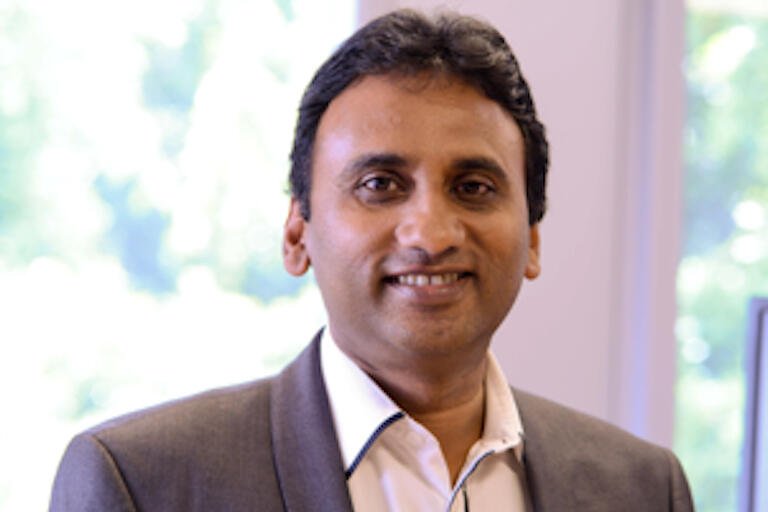
Professor Kovin Naidoo: From anti-apartheid activism to rewriting how the world treats avoidable vision loss
Professor Kovin Naidoo has spent his life proving that clear vision is not a luxury, but a public‑health right—and that African leadership can move eye health from the margins of charity into the centre of global health agendas. His journey is a powerful story for Afrispora News.
From anti‑apartheid activism to global eye‑health leadership
Professor Kovin Naidoo is a South African optometrist, former anti‑apartheid activist and political prisoner who turned his commitment to justice into a global campaign for accessible eye care. A graduate of the Pennsylvania College of Optometry (PCO) at Salus University, he distinguished himself early as a thought leader in public health and education, later receiving the university’s Presidential Medal of Honor in 2022 for his global impact. Naidoo has held academic posts as Honorary Professor of Optometry at the University of KwaZulu‑Natal and Visiting Professorial Fellow at the University of New South Wales, while publishing extensively on epidemiology, refractive error and public‑health approaches to eye care.
He is the former CEO of the Brien Holden Vision Institute (BHVI) in Australia, where he led a multi‑national social enterprise working at the interface of translational research, optometry education and large‑scale service delivery. Under his leadership, BHVI expanded programmes on myopia control, affordable lenses and workforce training, especially across Africa, Asia and Latin America.
Putting uncorrected refractive error on the global health map
Naidoo is widely credited with helping bring uncorrected refractive error (URE)—the simple lack of eye exams and glasses—“to centre stage of the global public health agenda.” Through research, advocacy and coalition‑building with organisations like the International Agency for the Prevention of Blindness (IAPB), he argued that hundreds of millions of people living with poor vision are locked out of education, work and safe mobility, even though inexpensive solutions exist. He became the first optometrist to serve as Africa Chairperson of IAPB, reflecting both his professional stature and his role in elevating optometry within broader eye‑health coalitions.
As a member of the editorial committee for the WHO World Report on Vision (2019) and a key contributor to global mapping of the optometry workforce, Naidoo has helped generate the data that underpin WHO’s SPECS 2030 and other initiatives to integrate vision into universal health coverage. His work emphasises that without trained personnel, affordable products and functional referral systems, billions will remain unseen by their health systems—even as myopia and other conditions surge worldwide.
Campaigns, coalitions and social impact
Naidoo has founded or co‑founded several major initiatives:
- Our Children’s Vision Campaign – a global initiative he led as Founder and Global Director, aiming to reach 50 million children with eye‑health services by 2020 and bringing together over 100 organisations and professional associations.
- African Vision Research Institute (AVRI) – established to build research capacity in Africa, supporting studies on refractive error, service models and workforce planning across the continent.[1][4]
- Global Myopia Awareness Coalition (GMAC) – which he helped found and later chaired, uniting industry and NGOs to raise awareness about the projected 50% global myopia prevalence by 2050 and to support WHO’s MyopiaEd digital‑education strategy.
In his current role as Global Head of Advocacy and Partnerships at the OneSight EssilorLuxottica Foundation and Senior Vice President for Social Impact at EssilorLuxottica, Naidoo leads efforts to scale last‑mile vision care through public–private partnerships. He reports that such collaborations have already helped set up around 400 vision centres in public hospitals with governments, bringing eye exams and affordable glasses closer to underserved communities.
Afrispora lens: vision, justice and African expertise
For Afrispora News, Professor Kovin Naidoo’s story encapsulates several key themes: African leadership in global health, the politics of visibility, and the power of social enterprise. As an anti‑apartheid activist turned global health leader, he connects struggles for political freedom with the fight against a quieter exclusion—the millions of children who cannot see the blackboard, workers who cannot read, and elders who lose independence simply because they lack basic eye care.
His work with BHVI, IAPB, GMAC, and the OneSight EssilorLuxottica Foundation shows how African‑born expertise is shaping norms, data, and investments in a field that once sat at the margins of global health debates. Documenting his journey with clarity, dignity, and historical integrity affirms a simple truth at the heart of Afrispora’s mission: that when Africans lead on design, research, and implementation, even something as “routine” as a pair of glasses becomes part of a larger project of freedom
