
Last updated: February 1, 2026
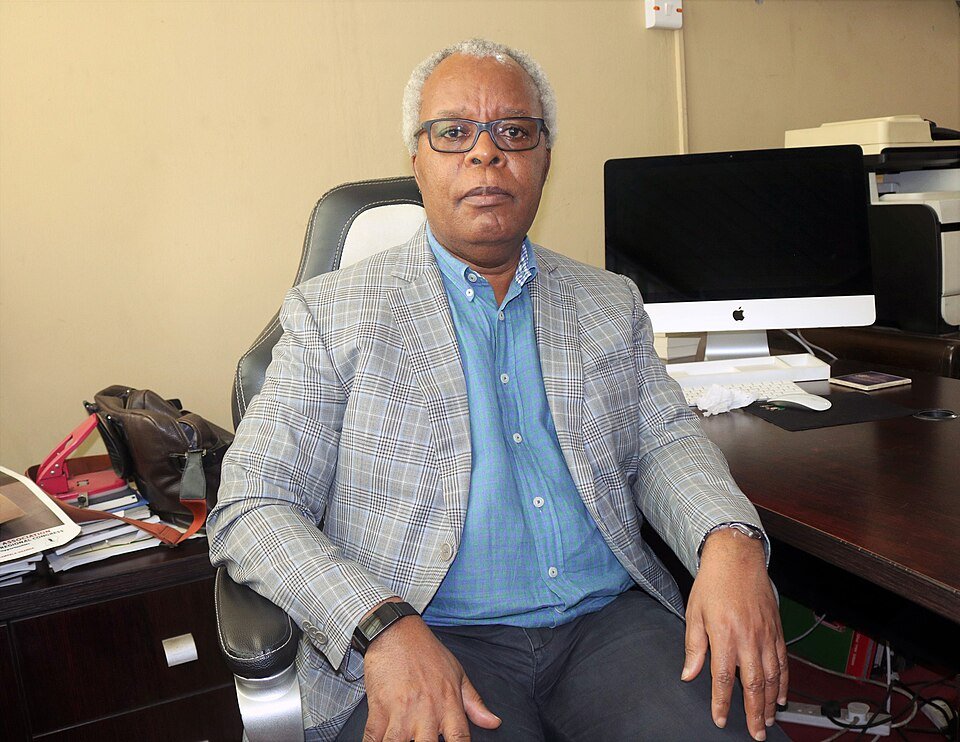
Professor Oye Gureje: Why African mental health reform now carries Nigerian scholarship at its core
Professor Oyewusi (Oye) Gureje has spent his career insisting that mental health is not a luxury for African societies, but a basic public good that must be built into laws, budgets and health systems from the ground up. His work is a vital addition to the Afrispora News tapestry of African global health leadership.
From Ilesa to a global voice on mental health
Born in 1952 in Ilesa, Osun State, Nigeria, Oyewusi Gureje studied medicine at the University of Benin and went on to complete a PhD in neuropsychiatry and a Doctor of Science (DSc) at the University of Ibadan. Since 1989 he has served as Professor of Psychiatry at the University of Ibadan and Consultant Psychiatrist at the University College Hospital, Ibadan, holding multiple leadership roles including Head of Department and Director of the Institute of Neurosciences. He is also Director of the WHO Collaborating Centre for Research and Training in Mental Health, Neurosciences, and Substance Abuse at Ibadan, and a Professor Extraordinary in the Department of Psychiatry at Stellenbosch University in South Africa.
Gureje is widely recognised as a leading figure in global mental health, with more than 500 peer‑reviewed publications and repeated listing in the top 1% of cited researchers in psychiatry and psychology by Clarivate Analytics. His research spans psychiatric epidemiology, cross‑cultural diagnosis, comorbidity between mental and physical disorders, ageing in sub‑Saharan Africa, and the development of integrated care models for mental health in low‑ and middle‑income countries.
Mental health policy and leadership across West Africa
Gureje is not just a prolific researcher; he has been a central architect of mental health policy in Nigeria and the wider region. As Chair of the National Mental Health Action Committee of the Federal Ministry of Health, he led the development of Nigeria’s current National Policy on Mental Health Service, a framework that aims to move care away from isolated psychiatric institutions toward community‑based, integrated services.
In 2010, he founded the Mental Health Leadership and Advocacy Programme (mhLAP) at the University of Ibadan, a pioneering initiative that has trained mental health specialists, service users, carers, civil‑society leaders and policymakers from at least 10 sub‑Saharan African countries. mhLAP has helped establish advocacy groups and supported policy and service development in the five Anglophone West African countries—Gambia, Ghana, Liberia, Nigeria and Sierra Leone—contributing to a new generation of mental health champions across the region.
His earlier paper on “Mental health policy development in Africa” in the Bulletin of the World Health Organization is now a classic reference, documenting the severe policy gaps and making the case for context‑appropriate, rights‑based frameworks. That agenda has since been taken up in WHO’s mhGAP and in national reforms, showing how African scholarship can drive global and regional normative change.
Shaping global classifications and global mental health agendas
Gureje has played a key role in redefining how mental disorders are classified globally. He served on the International Advisory Group for the revision of the Mental and Behavioural Disorders chapter of the ICD‑10 and later chaired the WHO Workgroup on Somatic Distress and Dissociative Disorders and the Workgroup on Cultural Guidance for the ICD‑11, which was adopted in 2019. His work helped ensure that the new classification reflects cross‑cultural evidence and avoids pathologising normal variations in distress, particularly in non‑Western contexts.
He has been part of the World Mental Health Surveys Initiative executive, a contributor to the landmark 2007 Lancet Global Mental Health series, and a founding member of the Movement for Global Mental Health. More recently, he served on the Lancet Global Health Commission on High‑Quality Health Systems in the SDG Era, co‑chairing the workgroup on ethics, and led or co‑led multi‑country implementation studies such as PaM-D, EXPONATE and STEPCARE, which tested collaborative care models and task‑sharing approaches in African settings.
One particularly notable trial, funded by the US National Institute of Mental Health under the Partnerships for Mental Health Development (PaM-D) project, examined collaborative care for psychosis between traditional/faith healers and conventional providers in Nigeria and Ghana. The study offered rare evidence on how to bridge gaps between biomedical and traditional systems, with implications for service design in many low‑ and middle‑income countries.
Afrispora lens: reclaiming mental health as a development priority
From an Afrispora News standpoint, Professor Oye Gureje’s trajectory shows how African scholars can reframe global debates from within. His insistence that mental health must be integrated into primary care, that classifications like ICD‑11 must reflect cultural realities, and that policy must be grounded in local epidemiology has shifted how international agencies and national ministries think about mental disorder in African contexts.
At the same time, his leadership of mhLAP and the WHO Collaborating Centre embodies a core Afrispora theme: African institutions not just implementing imported models, but producing knowledge, training leaders and shaping norms that circulate globally. In a world where mental health remains under‑funded and often misunderstood, Gureje’s work reminds us that African expertise is essential to closing both the treatment and the justice gaps—making his story a critical piece of the historical record Afrispora News is building
