
Last updated: February 1, 2026
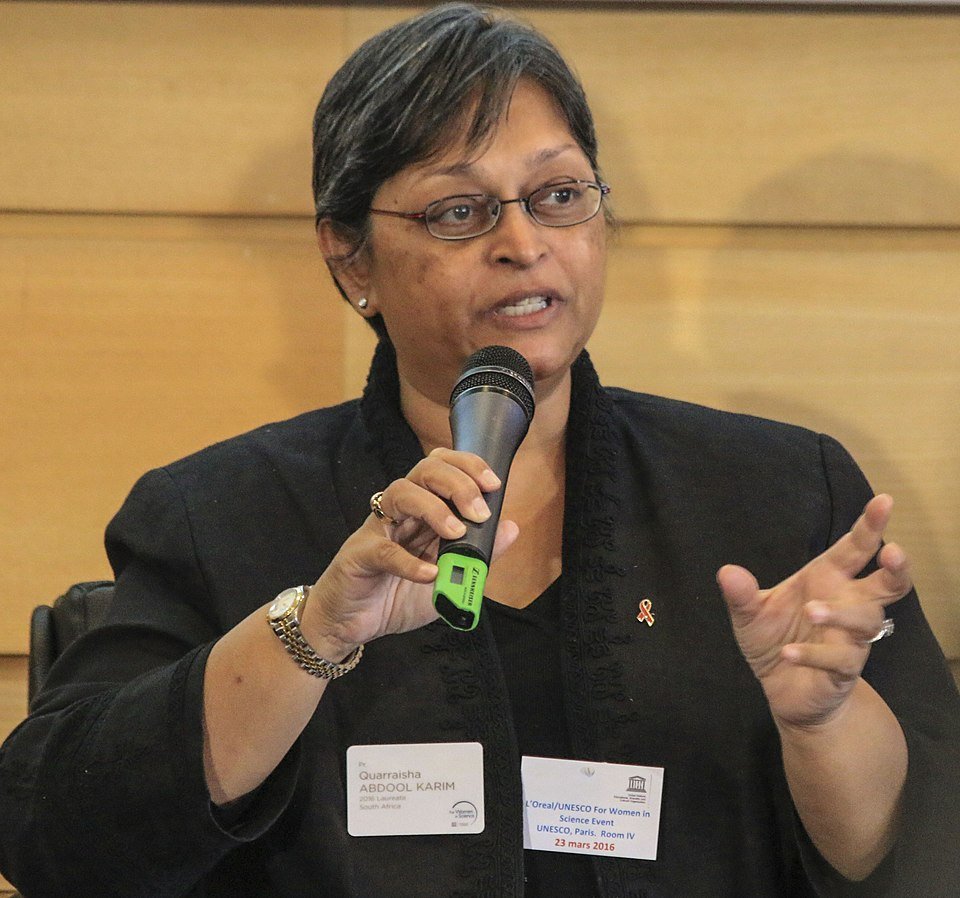
Professor Quarraisha Abdool Karim: From CAPRISA microbicide trials to shaping WHO, UNAIDS, and SDG frameworks, Abdool Karim has centred young African women in global HIV prevention science
Quarraisha Abdool Karim stands at the heart of one of the most important shifts in global HIV policy: the recognition that young African women need tools they can control, backed by evidence generated in their own communities—not just in Northern laboratories. For Afrispora News, her story is a quintessential example of African science reshaping global norms.
From Tongaat to the front lines of the HIV epidemic
Born in 1960 in Tongaat, South Africa, Professor Quarraisha Abdool Karim trained as an infectious‑disease epidemiologist and has spent more than three decades mapping, understanding and confronting the HIV epidemic in southern Africa. She serves as Associate Scientific Director of the Centre for the AIDS Programme of Research in South Africa (CAPRISA), Professor of Clinical Epidemiology at Columbia University’s Mailman School of Public Health, and Pro Vice‑Chancellor (African Health) at the University of KwaZulu‑Natal.
From early in her career, Abdool Karim focused on the dynamics of HIV transmission among adolescents and young women in KwaZulu‑Natal, using community‑based surveys to show that girls and young women were acquiring HIV infections five to seven years earlier than their male peers, largely through relationships with older men. Those findings pushed her to ask a simple but radical question: what if HIV prevention tools centred women’s agency, rather than relying on male consent to condoms or behaviour change?
CAPRISA 004: proving women‑controlled HIV prevention is possible
Abdool Karim is best known globally as the Principal Investigator of the CAPRISA 004 trial, which tested a tenofovir‑based vaginal microbicide gel to prevent HIV in women. Conducted with South African women in KwaZulu‑Natal, the study demonstrated that pre‑ and post‑sex use of tenofovir gel reduced HIV acquisition by 39% overall—and by up to 54% among women with high adherence—providing the first proof of concept that an antiretroviral‑based vaginal microbicide could work. Science magazine recognised CAPRISA 004 as one of its Top 10 scientific breakthroughs of 2010, signalling that an African‑led trial had shifted the global frontier of HIV prevention science.
Although later trials with similar gels produced mixed results, the CAPRISA 004 evidence played a critical role in the World Health Organization’s recommendation of daily oral tenofovir‑containing pills as pre‑exposure prophylaxis (PrEP) for people at substantial risk of HIV infection. Today, more than 60 countries—including numerous African states—have incorporated PrEP into their HIV prevention programmes, a policy arc that runs directly from Abdool Karim’s work with women in rural and peri‑urban KwaZulu‑Natal to global guidelines.
Global roles: UNAIDS, WHO and the SDGs
Beyond the lab and the field site, Abdool Karim occupies key positions in global health governance. She serves as UNAIDS Special Ambassador for Adolescents and HIV, co‑chairs the UNAIDS Advisory Group to the Executive Director, and sits on the PEPFAR Scientific Advisory Board, where she helps guide the world’s largest bilateral HIV programme. She is also a member of the WHO Covid‑19 Solidarity Therapeutics Trial and Vaccines Trial Steering Committees, ensuring that African perspectives shape the evidence base for pandemic response.
At the UN, Abdool Karim co‑chairs the Technology Facilitation Mechanism linked to the Sustainable Development Goals (SDGs), a role that extends her influence beyond HIV into broader debates on science, technology and innovation for development. She is also Vice‑President (Southern Africa) of the African Academy of Sciences, a Gairdner Award laureate, and as of 2025, a Fellow of the Royal Society—one of the highest honours in global science.
Mentorship, capacity building and women in STEM
Abdool Karim’s impact is not limited to her own publications—now numbering more than 300 peer‑reviewed papers—but extends through the hundreds of scientists she has helped train. Since 1998, she has played a central role in the Columbia University–Southern African Fogarty AIDS International Training and Research Programme, which has supported the training of more than 600 African researchers. Through CAPRISA, she has nurtured a generation of young investigators, many of them women, who now lead their own projects on HIV, tuberculosis and COVID‑19.
Her advocacy for women in science is explicit. UNAIDS notes that as Special Ambassador she not only focuses on adolescents and HIV, but also on young women in STEM, encouraging girls to pursue careers in science, technology, engineering and mathematics and pushing institutions to confront gender bias in recruitment, promotion and funding. For initiatives like WomenLift Health and global forums such as the Concordia Summit, she is frequently invited as a keynote voice on gender, science and leadership.
Afrispora lens: science, power and young African women
From the vantage point of Afrispora News, Professor Quarraisha Abdool Karim’s significance runs on two intertwined tracks. On one, she is a world‑class scientist whose work has literally changed the menu of HIV prevention options available to young women in Africa and beyond. On the other, she is a bridge between township clinics, rural communities and global decision‑making rooms—someone who carries the data and stories of young African women into spaces where norms, guidelines and budgets are set.
Her career makes a simple but profound claim: African women are not just the “beneficiaries” of HIV programmes, they are the authors of the science and policy that determine whether those programmes work. For a platform like Afrispora News—committed to documenting African and diaspora achievement with clarity, dignity and historical integrity—her story is a cornerstone narrative: a South African epidemiologist who turned local evidence into global change, and who continues to mentor the next generation tasked with finishing the work she helped begin.
